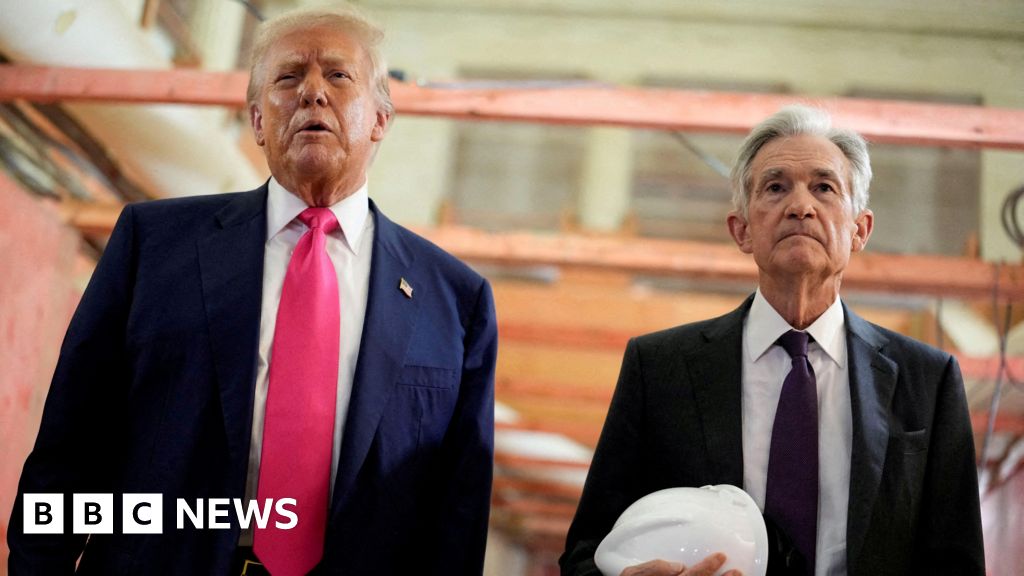
Powell's Reality Check: US Futures Sink as Recovery Hopes Dim
Wednesday's trading session kicked off with a palpable sense of trepidation, as US futures registered significant pressure in the European session. This early indication of market sentiment, often observed well before the bell, set a somber tone following Federal Reserve Chair Jerome Powell’s recent comments. Investors, still reeling from Tuesday's sharp sell-off on Wall Street – the most substantial in a month – appeared to be reassessing their expectations for an swift economic rebound. The dollar, meanwhile, held steady amidst the uncertainty.
All four major US futures contracts, including those for the S&P 500, Dow Jones Industrial Average, Nasdaq 100, and Russell 2000, were firmly in the red this morning. This erased gains achieved during an otherwise positive Asian trading session and highlighted a growing bearish sentiment. The Dow futures were particularly hard hit, reflecting concerns about large industrial companies, while Russell 2000 futures extended a multi-day selloff for the underlying small-cap gauge. This widespread dip in futures before the bell underscored a stark shift in investor psychology: the once-popular notion of a swift "V-shaped" economic recovery, anticipated by many market analysts as coronavirus restrictions lifted, now seems a distant memory.
Powell's Sobering Message: An End to V-Shaped Dreams?
The catalyst for this shift arrived in the form of Federal Reserve Chair Jerome Powell's sobering remarks at a recent town hall. His comments landed like an "icy splash of water" on optimistic investors, challenging the prevailing narrative that the economy would simply snap back to its pre-pandemic state. Powell explicitly stated, "we are not simply going back to the economy that we had before the pandemic," further emphasizing that the coronavirus would remain a factor "for a while."
This candid assessment effectively poured cold water on the idea of a rapid, unhindered return to normalcy. The implications for the market were immediate and clear. Economically sensitive, or "value" stocks, which tend to thrive during periods of strong growth and recovery, significantly underperformed. Conversely, defensive sectors – those less susceptible to economic cycles, such as utilities, consumer staples, and healthcare – were the only ones to show green, indicating a flight to safety among investors. This bifurcation highlights a crucial aspect of post-pandemic investing: understanding which sectors are poised to weather prolonged uncertainty versus those that require robust, consistent growth.
Understanding the Recovery Shape
The "V-shaped" recovery, characterized by a sharp decline followed by an equally sharp rebound, has been the ideal scenario. However, Powell's comments push us towards considering other possibilities:
- U-shaped recovery: A longer period of stagnation at the bottom before a gradual recovery.
- W-shaped recovery: A "double-dip" recession, where the economy recovers but then falls back again before a final rebound.
- L-shaped recovery: A sharp decline followed by a long period of stagnation.
- K-shaped recovery: Different parts of the economy recover at different rates, leading to divergence (e.g., tech booming while hospitality struggles). Powell's remarks about not returning to the old economy, and the underperformance of small caps, lend credence to elements of a K-shaped recovery.
US Futures Performance and Market Dynamics Ahead of the Open
The pressure observed on US futures before the bell wasn't uniform across the board. While all were down, Dow futures experienced the most significant drag, possibly due to their heavier weighting towards traditional industrial and financial stocks, which are more directly impacted by a slower economic recovery. The Russell 2000 futures, representing small-cap companies, continued their four-day selloff, indicating that higher borrowing costs and a more challenging economic environment disproportionately affect smaller businesses.
Interestingly, despite the broader negativity, there's a subtle but important dynamic at play. Some segments of the market, particularly within the tech-heavy Nasdaq, have shown relative resilience or even signs of finding a bottom after significant previous declines. This phenomenon, where certain sectors outperform during broader market downturns, suggests that investors are hunting for bargains in areas they believe have strong long-term growth potential, even amidst tightening fears. For a deeper dive into these nuanced market movements and how tech stocks are faring against a backdrop of rising rates, read our detailed analysis: US Futures Drop Amid Tightening Fears; Nasdaq Shows Relative Strength.
Monitoring these subtle shifts in futures before the bell provides critical insights into the underlying sentiment. It allows investors to gauge not just the overall direction of the market, but also which specific sectors or company sizes are expected to face headwinds or find support in the upcoming trading day. The sustained underperformance of the Russell 2000, for instance, signals ongoing challenges for small and medium-sized enterprises, which are often considered bellwethers for the broader domestic economy.
Global Markets React: Europe, Asia, and the Shifting Landscape
The ripples from Powell's remarks extended far beyond American shores, influencing global exchanges. European stocks, initially showing some mixed signals, ultimately whipsawed. The Euro Stoxx 50 Index briefly opened higher, fueled by some dip-buying in reflationary travel and leisure sectors and positive UK data, which showed increased consumer price index (CPI) year-over-year. However, this early optimism faded as the dollar strengthened, pushing European indices back into negative territory. Britain's FTSE 100 also surrendered an early advance, illustrating the fragile nature of market sentiment.
The British Pound (GBP) initially rallied on the better-than-expected CPI data, but its ascent was short-lived. The GBP/USD pair notably fell below its 200-day moving average (DMA), pressured downwards by the 50-day DMA, which is now heading towards a "Death Cross" – a bearish technical indicator where the short-term moving average crosses below the long-term one. This pattern, if confirmed, would coincide with the currency completing a potential top formation, signaling further weakness ahead. For now, demand appears to be holding the neckline of this potential top.
Asian equities, surprisingly, enjoyed a rebound. Despite the previous slide in US shares – exacerbated by disappointing US economic data that cemented arguments for growth disruption – China's Shanghai Composite outperformed, jumping 1.1%. This resilience occurred even amidst the country's significant tech regulatory clampdown, once again confirming a long-observed phenomenon: Chinese stocks often display an intriguing imperviousness to domestic setbacks, even when other global markets ironically sell off over "Chinese risks." This highlights the often-decoupled nature of some regional markets, driven by unique local dynamics and investor bases.
Meanwhile, the bond market also reflected the evolving sentiment. Investors loosened their grip on the Treasury note, allowing yields to edge higher for the first time after a four-day decline. This rebound in yields, off their previous lows, suggests a reassessment of future interest rate expectations, perhaps anticipating a less accommodative stance from the Fed sooner rather than later.
Navigating the Uncertainty: What Investors Should Watch Next
With global exchanges exhibiting a palpable sense of caution, risk assets are trading in a holding pattern. A growing sense of foreboding suggests that the Federal Reserve will begin removing stimulus in the near future. This pervasive caution, particularly regarding the Fed's next moves, resonates across global exchanges, a theme we delved into further in: Global Market Caution Rises: Investors Await Fed Tapering Clues.
Investors are now keenly focused on upcoming Fed communications for any further indication regarding the path to tapering its bond-buying program. While routine Fed meetings provide granular detail, the "real show" will undoubtedly be the Fed's annual conference at Jackson Hole, scheduled from August 26th through 28th. This symposium has historically served as a critical event, often acting as a catalyst for significant market moves. Expect policymakers' speeches and discussions at Jackson Hole to provide much-needed clarity on the Fed's outlook for inflation, employment, and monetary policy adjustments.
Practical Tips for Investors:
- Stay Informed: Regularly monitor official Fed communications and economic data releases. Powell's comments underscore the Fed's dominant influence on market sentiment.
- Diversify Wisely: In a K-shaped recovery scenario, broad market performance can mask significant divergence between sectors. Ensure your portfolio is diversified across different industries and asset classes that can perform well in varying economic conditions.
- Re-evaluate Risk Tolerance: Periods of uncertainty require a careful assessment of your personal risk tolerance. Defensive sectors might offer stability, while growth stocks might face higher volatility.
- Focus on Fundamentals: Look beyond short-term headlines and focus on the underlying fundamentals of the companies you invest in. Strong balance sheets, consistent earnings, and clear growth strategies will be crucial.
- Consider Long-Term Perspective: While daily fluctuations in futures before the bell can be concerning, maintaining a long-term investment horizon can help weather short-term volatility.
Conclusion
Jerome Powell's recent "reality check" has undoubtedly reset investor expectations, moving the market away from optimistic V-shaped recovery hopes towards a more cautious and nuanced outlook. The pressure on US futures before the bell signals a challenging environment, characterized by investor anxiety over economic growth, potential Fed tightening, and the prolonged impact of the pandemic. As global markets digest this new reality, the upcoming Jackson Hole Symposium will be pivotal in shaping future market direction. For investors, vigilance, strategic diversification, and a focus on fundamental strength will be key to navigating this period of heightened uncertainty and capturing opportunities as they arise.